Writing Class 6-8 Advertising a Product (1)
Warm-Up for Advertising a Product
The world around you is filled with advertisements, from click-bait on Web sites to commercials on television to billboards along interstate highways. One of the most common forms of persuasive writing is advertising.
How Can I Advertise a Product?
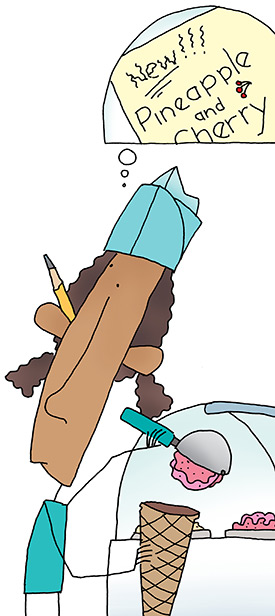
When you write to advertise a product, you think about what your readers want and match your product to their needs. “Wear these shoes, and jump higher!” “Use this lipstick, and look better!” “Drive this car, and be popular!” Advertisers make claims like these all the time. They try to convince you that their products do amazing things. They promise that you will look more attractive, get better grades, win friends, gain respect from adults, or accomplish your goals. Of course, many ads exaggerate their claims and manipulate viewers and readers.
In this unit, you will be asked to write an essay that fairly persuades others about the value of a product, such as a kind of food (breakfast bars) or a piece of technological equipment (virtual-reality headset). Persuasion is one of the most challenging kinds of writing because its purpose is to get people to act or to think in a new way. Your job is to convince readers to agree with your opinion. You must make a strong argument, yet you must also be truthful in what you say.
Thinking About Advertisements
How do effective advertisements work? They start by meeting a need or desire that the audience has. How? They use appealing images of the product, memorable slogans about it, and a call to action to get the audience to buy. You can experiment with those forms of persuasion below.
Think about products.
Answer the following questions to warm up your thinking about advertising a product. Make a copy of this Google doc or download a Word template.
- What is your favorite food? (Be as specific as you can, such as "Murray's Hawaiian Pizza.)
- What is your favorite movie? (Be specific.)
- Who is your favorite musician or band?
- What is your favorite mode of transportation?
- What other product would you enjoy advertising?
- Choose one of your answers as a product to advertise in this warm-up.
- Why do you like this particular product?
- Why would readers like this particular product?
- What image could you use to sell this product? (drawing, photo, logo, gif, video?)
- What slogan could you use to sell this product?
- What command would you give to get readers to buy the product?
Create an advertisement.
Create an original advertisement for the product you chose in the last activity. Include a sketch of the product, a catchy slogan, and a call to action.
Reviewing Advertisements
The true test of an advertisement is whether it motivates readers to buy the product. As a result, sharing your advertisement with classmates will help you understand what worked well (and what could work better).
Share your advertisement.
Trade ads with a classmate and review each other's work. Answer the following questions to help you think about your classmate's ad, and have the person answer the same questions about your ad. Then meet and discuss your work. Make a copy of this Google doc or download a Word template.
- What part of the advertisement appeals to you most? Why?
- What part of the advertisement appeals to you least? Why?
- Does the ad make you more or less likely to buy the product? Why?
- If you could offer your partner just one suggestion for improving this advertisement, what would you say?
Reading an Advertisement Poster and Essay
Before you create your own advertisement for a product, you should see how other writers persuaded their audiences to buy. Study the poster and essay below and think about how the writer convinced others to purchase the product.
Reading an Advertisement Poster
A persuasive poster uses visuals and words to connect a product to the needs of the audience. The graphics on the poster should not only grab the attention of the reader but also begin persuading the person. The slogan continues convincing readers by connecting to their desires. The call to action completes the persuasive pitch, asking the viewer to do something specific (buy the product!).
Sample Poster
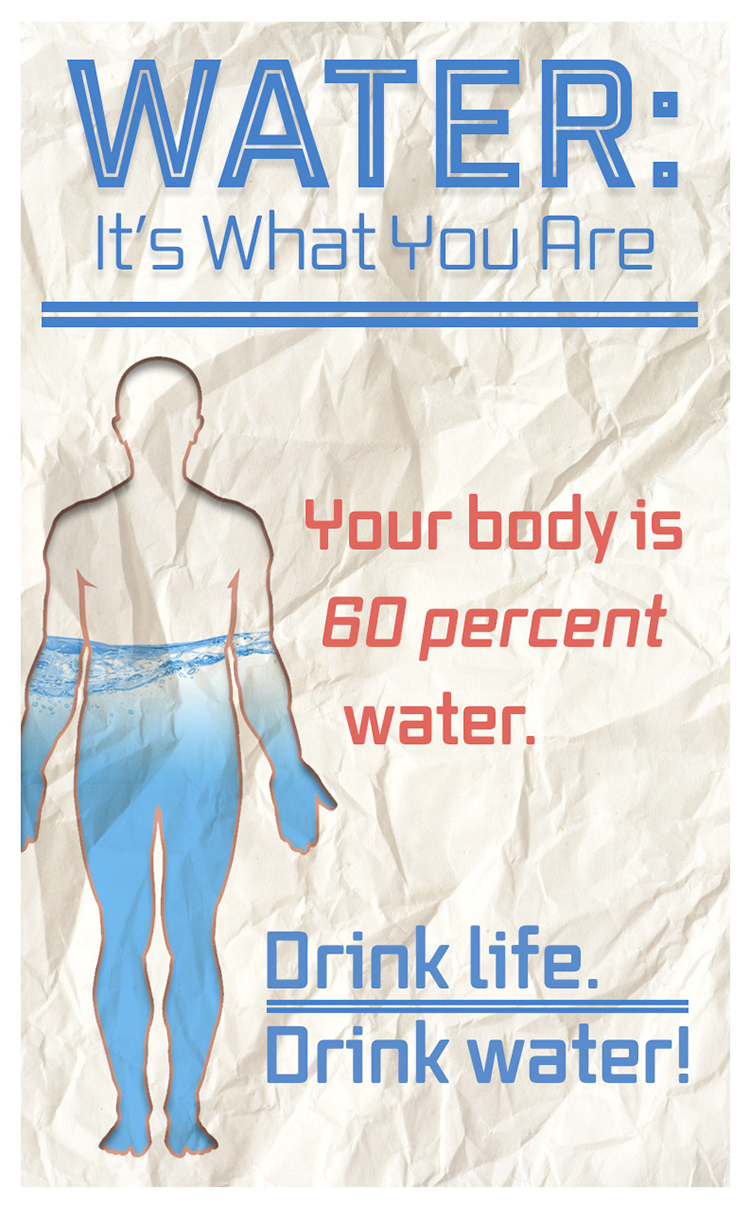
Respond to the poster.
Answer these questions about the poster. Make a copy of this Google doc or download a Word template.
- How does the slogan get your attention?
- How does the image help to persuade?
- What action does the poster call you to do? What reason does it give you to take that action?
Reading an Advertisement Essay
A persuasive essay has three main parts. The beginning paragraph starts with a lead that grabs the reader's attention and ends with an opinion statement. The middle paragraphs give reasons to support the opinion. The ending paragraph restates the opinion and provides an important final thought or a call to action.
Sample Essay
Just Drink Water!
LeadWhen you stop by the corner grocery on your way home from school, you can see the bottles of sports drinks lining the shelves. The candy-colored liquids catch your eye—bright blue, orange, neon green, and ruby red.Beginning Paragraph The labels promise you all kinds of benefits—vitamins, minerals, and, above all, extra energy. However, if you look at the main ingredient, you’ll see that it’s water. So why not just drink water? Many doctors now think that water is the best thing for you. Opinion StatementIf you want a pure, replenishing, and healthful beverage, you should drink water instead of sports or energy drinks.
Middle ParagraphsFirst of all, water is pure and natural. It’s all around you in rivers and lakes, and it’s inside you, too. A large percentage of the human body is water. It’s true that there are lots of other things in the human body, like minerals and salts. It’s also true that you need them. But you can actually get enough of what you need from a balanced diet and plenty of water. A lot of sports drinks and energy drinks have all kinds of chemicals in them that can actually harm you. You take a big sip, and you take a big risk. Why bother when you can have a glass of water and know exactly what you’re getting?
ReasonsWater is what the body needs during workouts and heat waves. When you work out or spend time outside when it’s hot, your body sweats and loses a lot of water. That’s why you need to drink water before and after any exercise, especially in the heat. Sports drinks claim to have salts and electrolytes that get lost when you sweat. But doctors at the University of Texas Southwestern Medical Center say only super athletes and marathon runners lose significant amounts of those things. Most people can get those things from the food they eat. They say that water is just what people need.
Water doesn’t have sugar. Sugar is one of those things that you can get too much of. Eat too much sugar, and you’ll gain weight. Drink too much sugar, and you might damage your teeth. Sports drinks are loaded with sugar. That’s where the energy comes from. But, if you notice, the boost doesn’t last long, and you are actually more tired than before you quenched your thirst. Water will never give you cavities, and it will never make you tired.
Objections AddressedOf course, water has gotten a bad rap lately. The water crisis in Flint, Michigan, shows what can happen when public officials fail to ensure the purity of water. That failure, though, should only underscore how critical water is to all of us, and how we must insist on a clean, safe source. Bottled water can provide that safety, but many people do not recycle the bottles that water comes in, creating an environmental hazard that, ironically, can threaten the quality of ground water supplies. So cities must carefully monitor and purify their water for residents, and those who live in the country should use filters and other devices to safeguard their water supplies. These measures just show how important water is to all of us.
Ending ParagraphDrinking enough water is one of the best things that you can do for yourself and your body. It’s pure, and it’s natural. It doesn’t have junk in it that your body doesn’t need. In addition, it’s free. You just turn on the faucet. So, the next time you are tempted to buy a sports drink, remember that it’s candy-colored sugar-and-salt water. Save your allowance for something really great—like that new video game download you’ve been wanting—and drink water instead. Your wallet and your body will thank you for being so smart.
Respond to the essay.
Answer these questions about the persuasive essay. Make a copy of this Google doc or download a Word template.
- How does the opinion statement connect the product (water) to the reader?
- How would you summarize the main reasons given in the first three middle paragraphs?
Paragraph 2
Paragraph 3
Paragraph 4
- How does the writer answer an objection in the essay?
- What calls to action does the writer make in the ending paragraph?

Prewriting for Advertisement Essays
Prewriting is your first step in writing an essay to advertise a product. These prewriting activities will help you select a product to write about, develop an opinion statement, and gather and organize your reasons and details before you begin a first draft.
Prewriting to Select a Topic
The topic of your advertisement essay should be a product that you want to promote. For example, imagine that a malware-fighting program helped clean up your computer, and you want others to know about it.
Brainstorm topics.
Under each category in the chart, list four or five possible products that you could advertise. A sample topic appears under each category. Make a copy of this Google doc or download a Word template.
Narrow the list of products.
Narrow your list to three or four items that you would recommend to others. Put stars next to those products.
Prewriting to Identify Reasons
After you've chosen three or four products that you could advertise, you can think more deeply about them by identifying reasons that people would want to buy them.
Identify reasons.
In the first column of the chart below, write the three or four products you chose in the last activity. In the second column, write at least three reasons for liking each product. In the third column, write reasons others might not enjoy the product. Make a copy of this Google doc or download a Word template.
Select a topic.
Share your chart with a partner. Talk about other reasons (for or against) the products. Choose the best topic for your essay.
Prewriting to Gather Details
Details are facts that support your reasons. Supporting details often come from research, expert opinions, personal experiences, or observations. You can research your subject in books and magazines and on the Internet. The chart below shows the details one student collected.
Gather details to support your reasons.
Fill out a detail chart for your own topic. In the left column, list your reasons and one objection. In the right column, write three or more details to support each reason and respond to the objection. Research your topic as needed to find details. Make a copy of this Google doc or download a Word template.
Create an opinion statement.
Review the formula for creating an effective opinion statement. Then write an opinion statement for the product that you want to advertise. Make a copy of this Google doc or download a Word template.
- What is your product?
- What is your main reason for promoting it?
- Create an opinion statement that names your topic and provides your reason.

Writing an Advertisement Essay
Now that you have chosen a product to promote, listed reasons to use it, and gathered details to support your reasons, you are ready to connect your ideas in a first draft. These writing activities will help you create a strong beginning, middle, and ending. You'll also read another student's advertisement essay to see how all of the parts came together.
Writing the Beginning Paragraph
The first sentence is the lead. It should capture your reader’s interest, getting people interested in your product.
Write a lead.
Review each lead-writing strategy and write an example of your own. Make a copy of this Google doc or download a Word template.
- Ask the reader a question.
What weighs less than a pound and could save your life?
- Start with a story.
After school, you walk out the door and throw on your backpack. You unlock your bike from the bike rack. Then you hop on and ride off. What’s missing from this picture?
- Begin with an important quotation.
"Wear a helmet now. Finish living later." That's just one slogan of many submitted to the recent Bicycle Helmet Safety Slogan Contest.
- Make a surprising statement.
When bike fatalaties occur, 97 percent of the time, the rider had no helmet.
Write your beginning paragraph.
Write your lead and then provide details as you work toward your opinion statement. Write the opinion statement as the last sentence in the beginning paragraph.
Lead Sentence
Detail Sentences
Opinion Statement
Writing the Middle Paragraphs
The middle paragraphs of your essay should present the main reasons for your opinion. Each paragraph should focus on one reason and its supporting details.
Write middle paragraphs.
Write a topic sentence for the first reason people should want your product. Add examples, facts, observations, and definitions to support the reason. Then begin a new paragraph for the second reason, and so on. Use transition words or phrases to signal new information. Make a copy of this Google doc or download a Word template.
Transitions to Add Information
again
along with
also
another
finally
first
for instance
for this reason
in addition
in fact
in the same way
lastly
likewise
importantly
next
then
Middle Paragraph 1
Topic Sentence
Detail Sentences
Middle Paragraph 2
Topic Sentence
Detail Sentences
Middle Paragraph 3
Topic Sentence
Detail Sentences
Middle Paragraph 4
Topic Sentence
Detail Sentences
Middle Paragraph 5
Topic Sentence
Detail Sentences
Writing the Ending Paragraph
The ending of your advertisement essay should restate your opinion about the product and make a call to action. Remember, a call to action tells readers what you want them to do. In this case, you want them to try the product you are recommending.
Write your ending paragraph.
Try these ending strategies. Then combine some into an ending paragraph. Make a copy of this Google doc or download a Word template.
- Ask a question about the cause.
If Tour de France champions wear bike helmets, why don't you?
- Provide a startling statistic.
In 2014, bicyclists died from crashes at a rate just under two per day: 726 fatalities for the year. Most of those deaths could be prevented by wearing bike helmets.
- Call readers to action.
Protect your head, and maybe your life, by wearing a helmet when you ride.
Topic Sentence
Detail Sentences
Ending Sentence
Reading an Essay Advertising a Product
Read a sample.
Note how the writer put the parts together.
Use Your Brain, and Save Your Brain
LeadAfter school, you walk out the door and throw on your backpack. You unlock your bike from the bike rack. Then you hop on and ride off. What’s missing from this picture? There’s no bike helmet. Every year thousands of kids under the age of 16 are seriously injured while riding their bicycles. Many of those injuries could have been avoided if the cyclists had been wearing helmets.Opinion Statement If you want to avoid injuries, be responsible, and set a good example—always wear a helmet when biking.
Topic SentencesSafety is the number one reason that every cyclist should wear a helmet. According to the Center for Disease Control and Prevention, half a million cyclists are injured every year in the United States. The Bicycle Helmet Safety Institute reports that 97 percent of the fatalities happened to riders who were not wearing helmets. In 2014 alone, 729 cyclists died in crashes, nearly two per day. Most of those deaths could have been prevented by wearing a bicycle helmet.
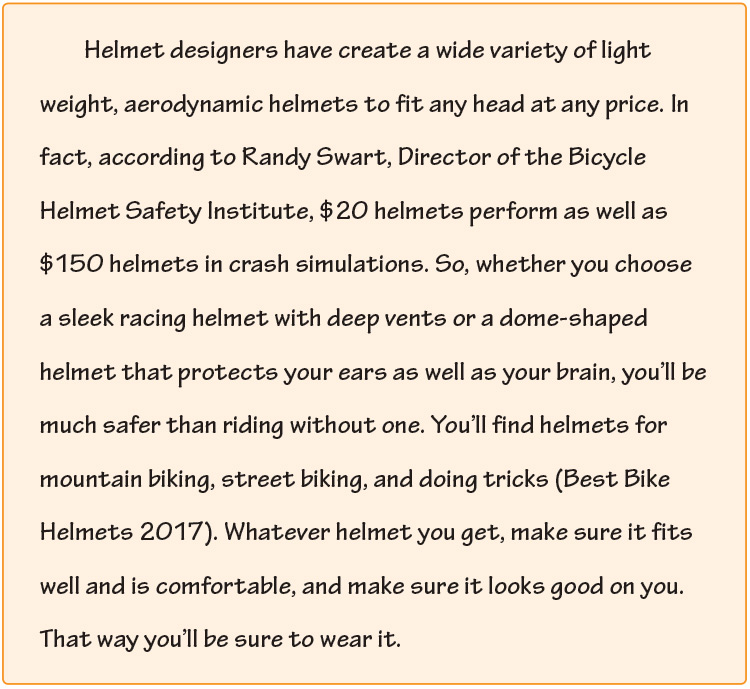
Helmet designers have created a wide variety of light-weight, aerodynamic helmets to fit any head at any price. Detail SentencesIn fact, according to Randy Swart, director of the Bicycle Helmet Safety Institute, $20 helmets perform as well as $150 helmets in crash simulations. So, whether you choose a sleek racing helmet with deep vents or a dome-shaped helmet that protects your ears as well as your brain, you'll be much safer than riding without one. You'll find helmets for mountain biking, street biking, and doing tricks (Best Bike Helmets 2017). Whatever helmet you get, make sure it fits well and is comfortable, and make sure it looks good on you. That way you'll be sure to wear it.
Wearing a helmet protects not only your head but the heads of all of the kids that look up to you. When we were little, we went to Safety Town to learn about crossing streets safely and riding our bikes with helmets. Those rules still apply now that we are teenagers, and are critical for us to model for younger people. Over 150 of the bike fatalities per year involve children. What if one of those children decided not to wear a helmet because "the big kids" don't wear helmets? Set a good example. Keep yourself safe, and show the little brothers, sisters, and neighbors in your life how they can keep themselves safe on their bikes.
Answer to ObjectionSome middle school students say that wearing helmets isn't cool because it is just for kids. However, more than 550 of the bicycle fatalities last year were not children, so bike helmets are really for people of all ages. Making good health decisions is cool, avoiding injury or worse. And, according to KidsHealth.org, the best way to fight the crowd who say helmets are not cool is to find a great looking helmet and wear it with pride.
A bike helmet is one of the most important pieces of bicycling equipment you can use. Yet, according to the Center for Disease Control and Prevention, almost no teens wear helmets! So do yourself a favor. Call to ActionProtect your head, and maybe your life, by wearing a helmet when you ride.

Revising Advertisement Essays
After you write a first draft, you're ready to revise. You need to think about how well you have connected your product to the needs of readers. You also need to make sure you haven't used any unfair appeals, which actually weaken your argument. These activities will help you revise.
Revising to Appeal to Readers
You can't convince people to buy your product by showing how it will help you. You must convince them by showing how your product helps them. To do so effectively, you need to think about the needs of your audience.
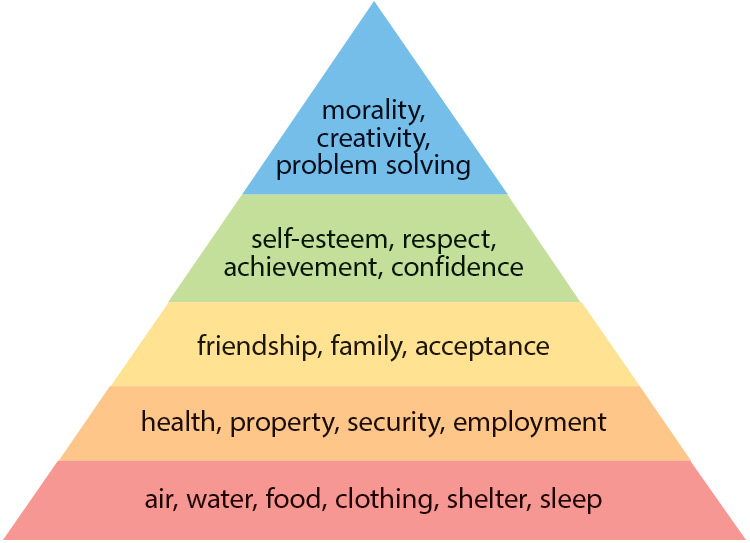
The American psychologist Abraham Maslow created a pyramid that showed different levels of human need. At the bottom, you'll find basic needs: air, water, food, and so on. On the next level, you'll find needs that build on those, and so on, going up to morality, creativity, and problem solving at the top. You can use this pyramid to connect your product to the needs of your readers.
Connect to readers' needs.
Answer the following questions to think of ways your product helps readers. Make a copy of this Google doc or download a Word template.
- How does your product connect with readers' basic needs (bottom-level)?
- How does your product connect with readers' intermediate needs (middle three levels)?
- How does your product connect with readers' upper-level needs (top triangle)?
- Choose three needs from the list above. For each one, write a sentence that appeals to your reader, showing how the person benefits from the product.
Revise to appeal to needs.
If one or more of the appeals you wrote in the last activity would strengthen your advertisement essay, revise to include these new connections.
Revising to Avoid Logical Fallacies
Now that you have connected your product to the needs of readers, you need to make sure you haven't made any unfair appeals. Often, advertisers appeal to readers' needs in unfair ways, using fuzzy thinking (logical fallacies) to convince others. These short-cuts to thinking fool readers rather than truly convincing them. Watch out for the following logical fallacies:
Jumping to Conclusions
Studies show that frequent Facebook users are often more depressed than others, so everyone should quit Facebook.
- Avoid the temptation to draw a conclusion that you haven't clearly supported with evidence. Just because some frequent Facebook users have higher depression doesn't mean that all Facebook users do. Also, the study doesn't show whether Facebook makes users depressed or whether depressed people turn to Facebook to feel better. This statement jumps to a conclusion.
Bandwagoning
Everybody who is anybody is on Facebook, so you'd better be, too.
- Don't say that a product is good because everyone likes it. This is called "bandwagoning" because people used to drive bandwagons through towns to convince people to join their cause. Something isn't necessarily true because many people agree with it. It's unfair to tell people to agree with you or be left out.
Exaggeration
People on Facebook are living in the interconnected future, while people who are not are stuck in the black-and-white past.
- This statement is clearly an exaggeration. Everyone is living in the present, whether they are on Facebook or not. And Facebook is certainly not at the cutting edge of social media. Readers will not be convinced by arguments that are so clearly blown out of proportion.
Half-Truths
Mark Zuckerburg is one of the richest people in the world, so he is trying to keep you on Facebook only for his own gain.
- Yes, Mark Zuckerburg is rich and wants to keep you on Facebook, but he has also created a social network that has helped many people in many ways. His wealth is only half of the story. Your argument is weakened when you make statements that ignore the other side of the issue.
All-or-Nothing Statements
The sole purpose of Facebook is to let the government and advertisers spy on you.
- Avoid using statements that allow for no other perspective. Though it is true that Facebook gathers a great deal of data on the interests of users and provides that data to advertisers, this is not the "sole purpose" of Facebook. Stating a position in such absolute terms makes it hard to defend.
Identify logical fallacies.
Identify the type of logical fallacy in each example below. Then write an explanation about why each statement is that kind of fallacy. Make a copy of this Google doc or download a Word template.
- The only reason for YouTube is cat videos.
Fallacy:
Explanation:
- YouTube often must take down copyrighted material, so people who use it are pirates.
Fallacy:
Explanation:
- YouTube is filled with many videos created by amateurs without the skill or equipment to produce quality work.
Fallacy:
Explanation:
- All the cool people love YouTube, so don't miss out.
Fallacy:
Explanation:
- YouTube contains literally every video a person could ever want to see.
Fallacy:
Explanation:
Check for logical fallacies.
Review your advertisement essay, watching for the five logical fallacies that you just learned about. If you discover any, make changes to avoid these persuasive pitfalls.
Revising with a Peer Response
Share your writing.
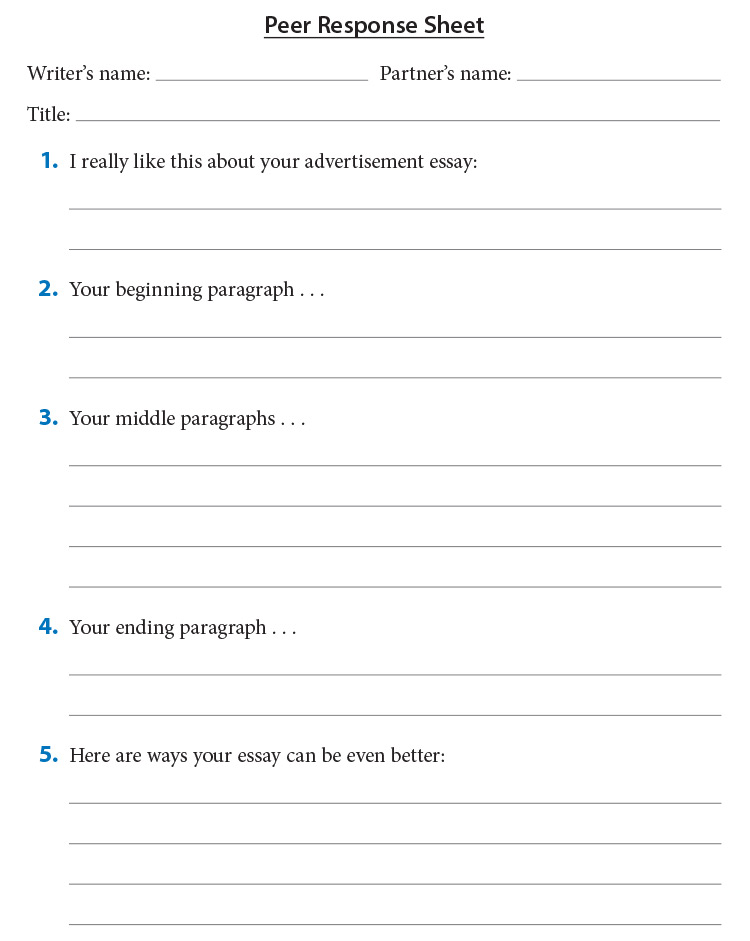
Have a partner read your essay and then respond to it by completing this form. A responder should try to list at least one strong point for each part and, if at all possible, one thing to improve. Make a copy of this Google doc or download a Word template.
Revising in Action
When you revise, you add, take out, rewrite, and rearrange your writing to make it clearer. Here are revisions to one student’s essay.
Paragraph Before Revising
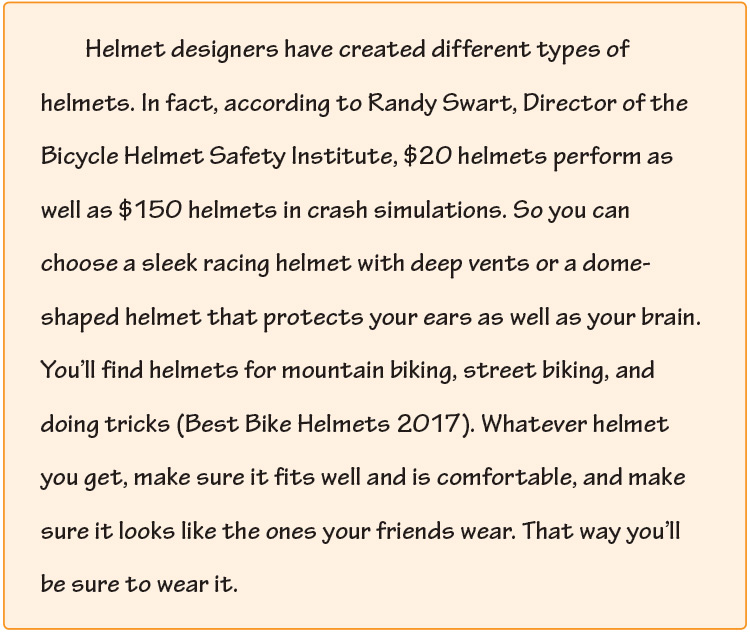
The writer appeals to readers and removes bandwagoning.
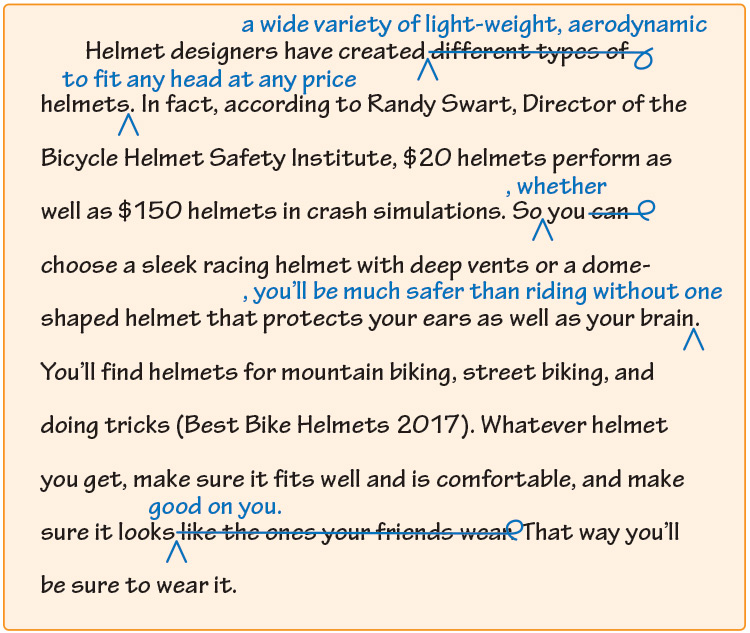
Paragraph After Revising
Revise with a checklist.
Read each line in the checklist. When you can answer each question with a yes, check it off. Make a copy of this Google doc or download a Word template.
Ideas
- Is my opinion statement clear?
- Do I provide strong reasons and develop them with details?
- Do I appeal to the needs of the reader?
- Do I avoid logical fallacies?
Organization
- Does the beginning paragraph state my opinion clearly?
- Does each middle paragraph explain a strong reason?
- Do I answer an objection in a convincing way?
- Does the ending paragraph wrap up the essay and give a call to action?
Voice
- Do I sound sincere and interested in the topic?
- Do I refute, answer, or concede objections in a fair and polite manner?
Word Choice
- Have I used specific nouns and active verbs?
Sentence Fluency
- Do my sentences flow smoothly from one to another?
- Do I use transitions to connect ideas?

Editing Advertisement Essays
After you've improved the appeals in your first draft, gotten rid of logical fallacies, and otherwise revised your advertisement essay, you are ready to edit your work. You'll look for problems with sentences, punctuation, capitalization, grammar, usage, and spelling. The following activities will help you.
Editing for Pronoun Agreement
A pronoun is used in place of a noun or another pronoun. The word that the pronoun refers to is called an antecedent. Pronouns and antecedents must agree. This means that they must both be singular or they must both be plural. It also means that the gender should match. Here are some examples.
Tula doesn’t think she needs a seat belt.
(The pronoun “she” and its antecedent “Tula” are both singular and feminine.)
Nick forgot to wear his seat belt.
(The pronoun “his” and its antecedent “Nick” are both singular and masculine.)
Seat belts save lives if they are used properly.
(The pronoun “they” and its antecedent “seat belts” are both plural.)
Check for pronoun-antecedent agreement.
In each sentence below, underline the pronouns and the antecedents. If they do not agree, correct the error. Make a copy of this Google doc or download a Word template.
- That linebacker should pay more attention to their diet.
- Teenagers think that he or she can eat poorly and not get sick.
- My friends believe they can eat chips for breakfast and lunch.
- Tess knows junk food affects their health.
- Sickly people may get well just by changing his or her diet.
- Doctors tell patients to put fruits and vegetables on their plates every day.
- Those boys put too much food on his plates.
- Bev trusted his own diet plan.
- Many people try to watch his weight.
- Charlie always eats the food he takes.
Edit for pronoun-antecedent agreement.
Reread your essay, making sure all pronouns agree with their antecedents. If you find any problems, correct them.
Editing for Subject-Verb Agreement
Just as a pronoun must agree with its antecedent, a verb must agree with its subject. Singular subjects take singular verbs. Plural subjects take plural verbs.
My brother calls our family van "Jeffrey."
(The subject "brother" and the verb "calls" are both singular. A singular noun rarely ends in s, but a singular verb often does).
His friends think Jeffrey is a rusty rattletrap.
(The subject “friends” and the verb "think" are both plural. A plural noun often ends in s, but a plural verb usually does not.)
When two or more subjects are joined by and, they are always plural.
Gabe and Sam say Jeffrey is the "tan man van."
(Though "Gabe" and "Sam" each are singular, when they are joined by and, they become plural.)
When two or more subjects are joined by or, the verb must agree with the last subject.
Eli, Aidan, or Gabe drives Jeffrey every morning to school.
(The word "or" separates the subjects rather than joining them, so the verb "drives" is singular to agree with "Gabe.")
Check for subject-verb agreement.
In each sentence below, correct any problems with subject-verb agreement. If the sentence is correct already, leave it. Make a copy of this Google doc or download a Word template.
- We calls our Dodge Raider "Darth," so that it is "Darth Raider."
- A friend refer to her truck as "The Wheelbarrow" because her friends borrows her wheels to haul stuff.
- Hot rods from the 50's has names like "Greased Lightning."
- I want a car named, "Never Gets a Ticket."
- Claire and Quinn takes turns driving their parents' convertible.
- Either their parents or Claire fill the gas tank.
- Quinn does not have a job, so she let others pay for gas.
- Claire, Quinn, or Harry get to take the convertible to college.
- People dreams of flying cars.
- A dream car is unlikely; a working reality like Jeffrey are what most people get.
Edit for subject-verb agreement.
Reread your essay, making sure your subjects and verbs agree in number (singular or plural).
Editing in Action
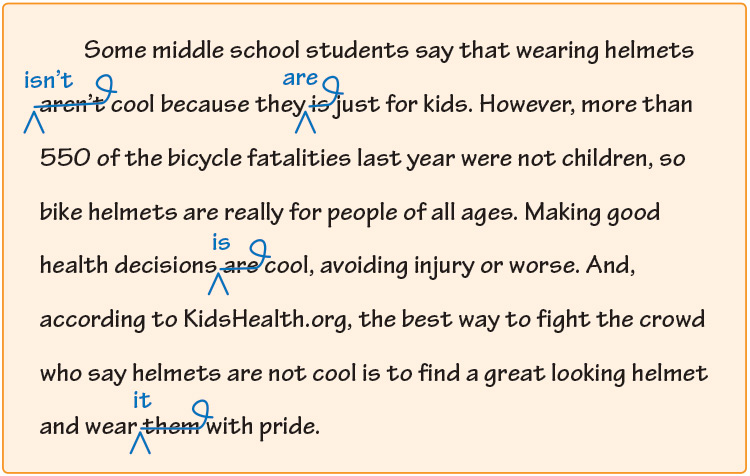
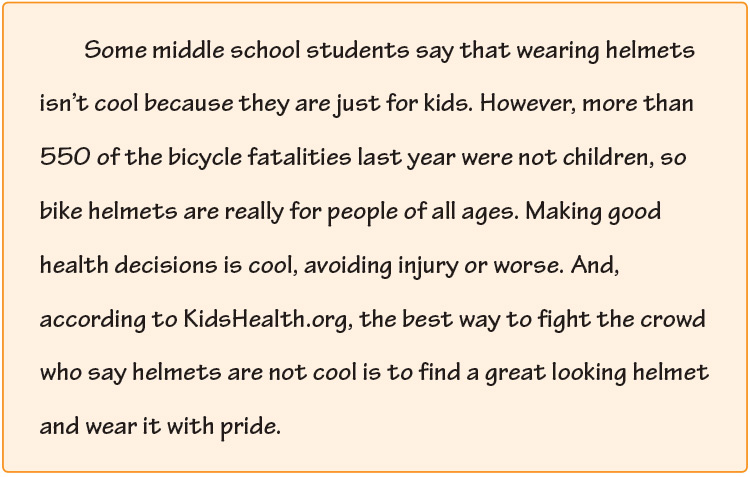
When you edit, you check to make sure your essay is correct.
Before Edits
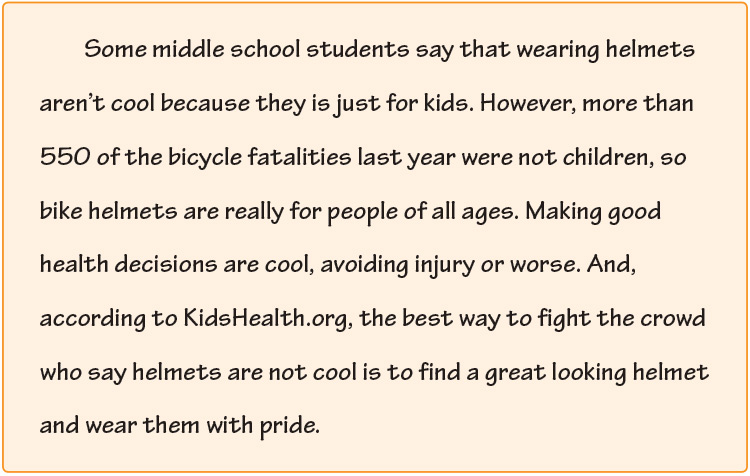
The editor fixes subject-verb agreement and pronoun-antecedent agreement.
After Edits
Edit with a checklist.
Read each line. When you can answer each question with a yes, check it off. Make a copy of this Google doc or download a Word template.
Punctuation
- Did I close each sentence with an end punctuation mark?
- Do commas follow four or more introductory words?
Capitalization
- Did I start all sentences with capital letters?
- Did I capitalize the names of people and places?
Grammar
- Do my pronouns and antecedents agree (All students need their own pencils.)?
- Do the subjects and verbs agree in number? (Birds sing; David whistles.)
Usage
- Did I use an appropriate level of language?
- Did I correctly use commonly confused words (affect/effect)?
Spelling
- Did I check for spelling errors?
- Did I use a dictionary or the spell checker on my computer?

Publishing Promotion Essays
When you publish your writing, you make it public. First, you need to make a clean final copy of your work. Then you should find ways to share what you have written with classmates, your teacher, your family, and your friends.
Publishing a Final Copy
Create a final copy of your advertisement essay.
Include your editing changes and read over your work a final time. (If you are working on a computer, spell check your work.)
Reflecting on Your Writing
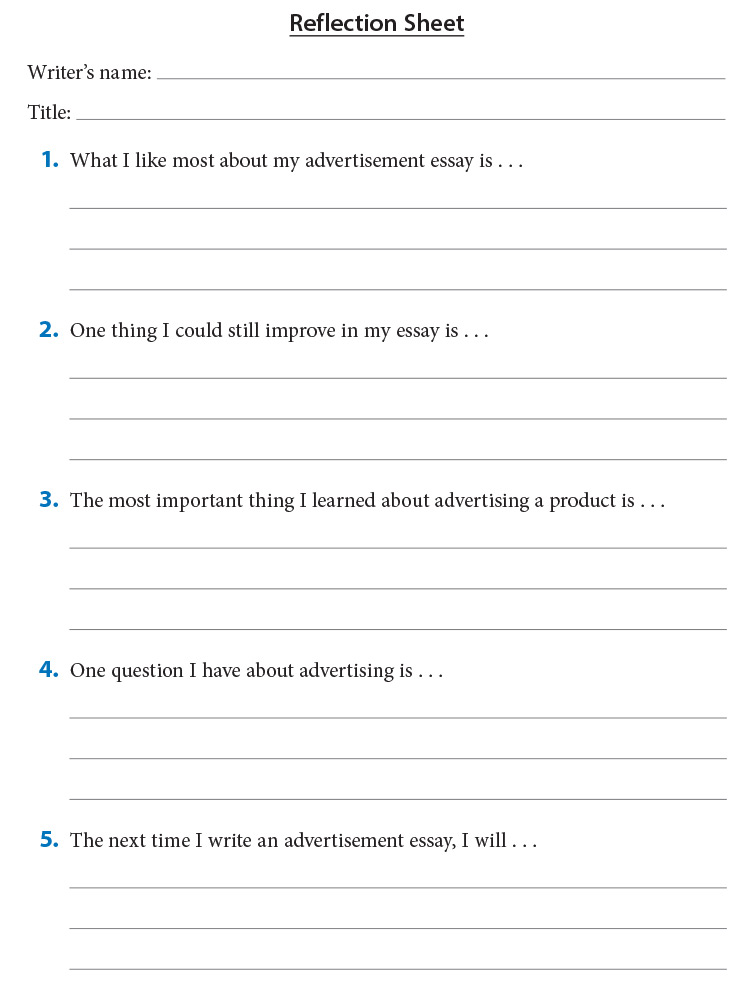
Reflect on your writing.
Complete the following form to think about what you learned. Make a copy of this Google doc or download a Word template.
Comments
Post a Comment